Post-Traumatic Disorder Afflicting Public Safety Officers: The Presumption Law Explained
Labor Code Section 3212.15, effective January 1, 2020, is known as the public safety officer post- traumatic stress disorder (PTSD) presumption law. The law has been amended on one occasion to extend the ending date of this provision, and it is currently set to terminate as of January 1, 2029. Thus, it is currently applicable to dates of injury, whether specific or cumulative, between January 1, 2020 and January 1, 2029. It applies to active firefighters of a city or county, and peace officers, as defined in Section 830.1 of, subdivisions (a), (b), and (c) of Section 830.2 of, Section 830.32 of, subdivisions (a) and (b) of Section 830.37 of, Section 830.5 of, and Section 830.55 of, the Penal Code, who are primarily engaged in active law enforcement activities. It applies when the diagnosis of PTSD develops or manifests itself during a period when the public safety officer is in the service of the department, unit, office, or agency.
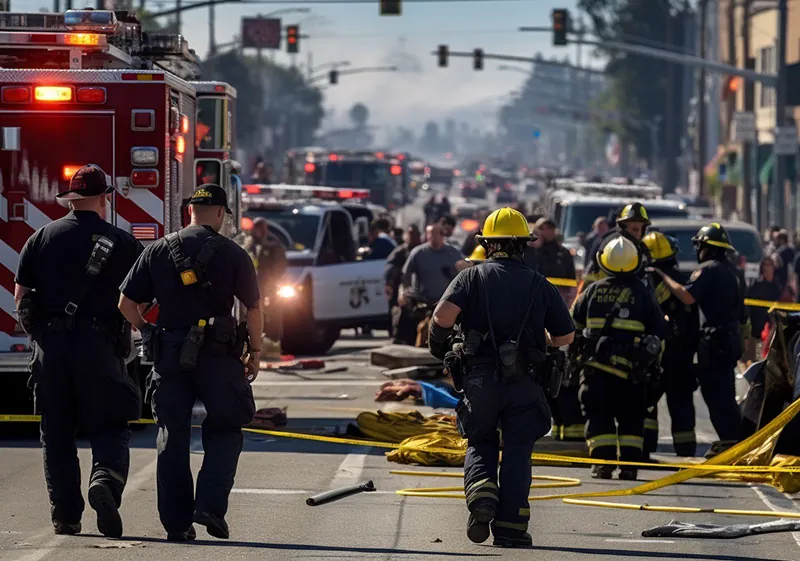
This statute was created to serve in important public policy, as noted in the legislative intent of this statute:
The Legislature finds and declares all of the following:
(a) Firefighting and law enforcement are recognized as two of the most stressful occupations. Only our nation's combat soldiers endure more stress. Similar to military personnel, California's firefighters and law enforcement personnel face unique and uniquely dangerous risks in their sworn mission to keep the public safe. They rely on each other for survival while placing their lives on the line every day to protect the communities they serve.
(b) On any given shift, firefighters and law enforcement personnel can be called on to make life and death decisions, witness a young child dying with their grief-stricken family, or be exposed to a myriad of communicable diseases and known carcinogens. Firefighters and law enforcement personnel are constantly at significant risk of bodily harm or physical assault while they perform their duties.
(c) Constant, cumulative exposure to these horrific events make firefighters and law enforcement personnel uniquely susceptible to the emotional and behavioral impacts of job-related stressors. This is especially evident given that the nature of the job often calls for lengthy separation from their families due to a long shift or wildfire strike team response.
(d) While the cumulative impacts of these aggressive, deadly events are taking their toll, our firefighters and law enforcement officers continue to stand up to human-caused devastation and nature's fury, but they are physically and emotionally exhausted.
(e) Trauma-related injuries can become overwhelming and manifest in post-traumatic stress, which may result in substance use disorders and even, tragically, suicide. The fire service is four times more likely to experience a suicide than a work-related death in the line of duty in any year.
(f) It is imperative for society to recognize occupational injuries related to post-traumatic stress can be severe, and to encourage peace officers, firefighters, and any other workers suffering from those occupational injuries to promptly seek diagnosis and treatment without stigma. This includes recognizing that severe psychological injury as a result of trauma is not "disordered," but is a normal and natural human response to trauma, the negative effects of which can be ameliorated through diagnosis and effective treatment.
Prior to the enactment of this statute (3212.15), and still in effect, is Labor Code Section 3208.3 (amended in 1993) stating that an employee must prove that 51% or greater of the cause of the psychiatric injury, known as "predominant cause," was work stress, in order to receive workers' compensation benefits.
The issue of proving causation for psychiatric injury was not reconciled by these two statutes, Labor Code Sections 3208.3 and Labor Code Section 3212.15, and was not specifically addressed by the Legislature when 3212.15 was enacted, leaving the issue to the courts to determine. The specific question presented:
Does a public safety officer still need to prove predominant cause in order to qualify for the PTSD presumption statute?
These two statutes recently collided in a case that I handled. In this case, the public safety officer worked for two separate agencies for a total of 20 years. The first 17 years at a City agency, and the last three years at a County agency. When he lateralled to the County, he passed the psychiatric clearance to do the job. Unfortunately, he witnessed an event at the County that triggered, and caused, for the first time, a diagnosis of PTSD. The officer filed a cumulative trauma claim alleging PTSD injury and asserted that the County should accept his claim per the presumption statute (3212.15). The reporting Qualified Medical Examiner in the case identified five (5) incidents throughout the course of his twenty (20) year career that contributed to the PTSD when it manifested itself during his County employment, and determined each had equal cause. The first four (4) incidents were at the City, the last was at the County. In light of this history, the County denied the claim and asserted that since they were only responsible for 20% of the cause of the PTSD, that the officer had not met the Labor Code Section 3208.3 predominant cause requirement.
The case went to trial. I argued that (1) the law requires that the employer in the last year of a cumulative trauma claim be responsible for the injuries even if there was injurious exposure beyond that last year of employment by work at another employer (Labor Code Secton 5412), and (2) the presumption PTSD statute (3212.15) was created years after Labor Code Section 3208.3 was enacted; it was clear that the legislature had knowledge of 3208.3 when they enacted this bill, and further if the legislature intended to require an applicant to prove predominant cause for the limited diagnosis of PTSD it would have said so. It did not. Further, it didn't make any sense that a statute (3212.15) with its stated goal of expediting benefits to a public safety officer suffering from "[t]rauma-related injuries [which] can become overwhelming and manifest in post-traumatic stress, which may result in substance use disorders and even, tragically, suicide," would then require the extra burden of requiring the predominant cause mandate of Labor Code Section 3208.3. The trial judge ruled in my client's favor, and the County appealed the decision.
On appeal, the Workers' Compensation Appeals Board resoundingly rejected the defendant's position, and agreed with my arguments, concluding,
"However, defendant insists that the Legislature implicitly imported section 3208.3(b)(1)'s predominant causation requirement into section 3212.15. According to defendant, the Legislature did this by enacting the latter statute without expressly excluding the predominant causation requirement of the former statute. We disagree….. [T]he sort of presumption afforded by section 3212.15 is a reflection of public policy whose purpose is to provide additional compensation to employees who provide vital and hazardous services by easing their burden of proof of industrial causation. In this case, defendant's proposed interpretation of section 3212.15 - that it inherited the long-standing predominant causation requirement of section 3208.3(b)(1) – would have the opposite effect that evidently was intended by the Legislature. That is, defendant's interpretation of section 3212.15 would likely reduce compensation to employees (like this applicant) who provide vital and hazardous services, by further burdening their burden of proof. Defendant's proposed interpretation also is inconsistent with well-settled rules of statutory construction, e.g., statutes should be interpreted so as to promote rather than defeat the purpose of the statute, and interpretations that lead to absurd consequences should be avoided."
The court's decision resolves the conflict between these two statutes, and affirms the important public policy of allowing easier access to workers' compensation benefits for a PTSD injury sustained by a public safety officer.

